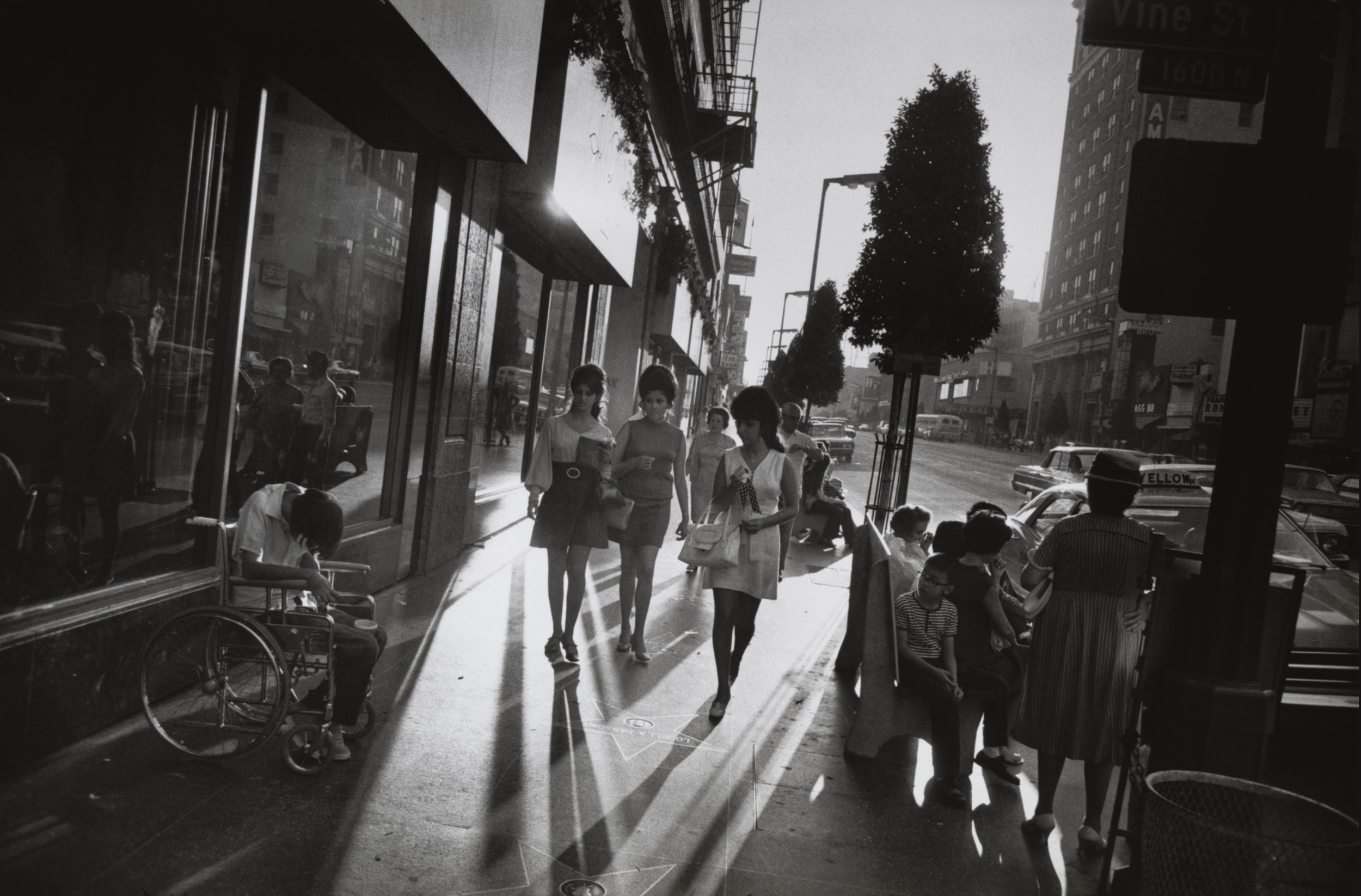
Garry Winogrand, Los Angeles, California. 1969
Sometimes I wonder if looking at too many photo books makes me worse at making pictures…
I'll spend a few hours studying Garry Winogrand's work and suddenly I'm in chaos mode, looking for crowded sidewalks, expressions, and people naturally creating interesting compositions. Or I’ll read Henri Cartier-Bresson’s “The Decisive Moment” and start paying attention to geometry, gestures, and the way people move through a scene. Or I’ll pick up Stephen Shore’s “Uncommon Places” and the most unremarkable street corners, parked cars and storefronts start feeling almost poetic.
There's nothing wrong with any of that. Studying other photographers is how we learn. But lately I've been wondering how much of what I'm seeing is actually mine, and how much is borrowed from someone else's way of looking at the world.
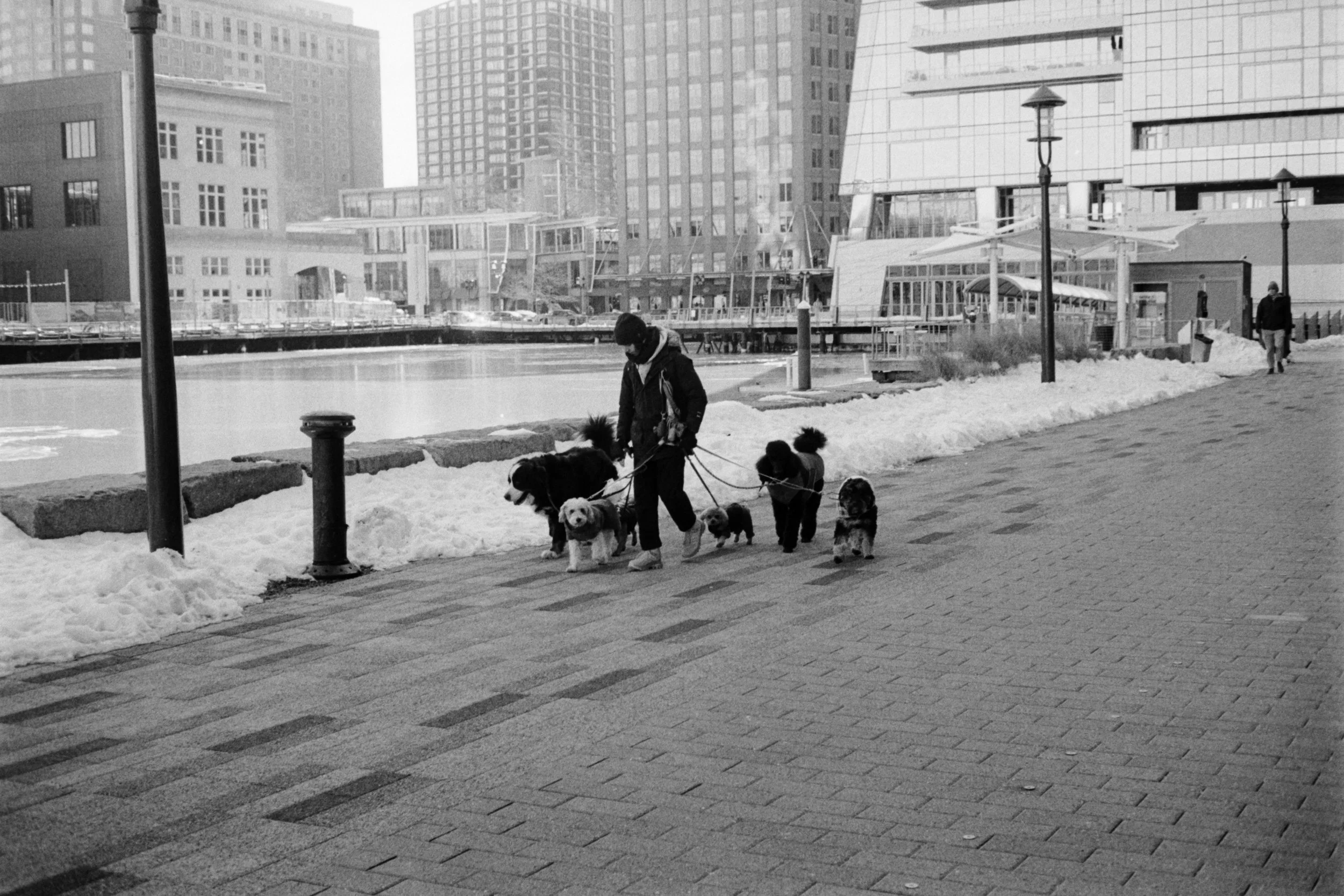
Nathan Duarte, Boston, Massachusetts. 2026
When I first picked up photography as a hobby, there were no rules or guidelines on making photographs, but my photographic eye was already there in its rawest form. I tend to take things a lot more seriously than I probably should, so I decided to look into other photographers throughout history who were doing the same thing I was during their time, which led me to make 2026 the year I’d study a different master photographer every month.
Stephen Shore was one of the first photographers whose book I picked up to study. And I was so incredibly underwhelmed by his work, initially. Looking at it today, a lot of it felt like images I could make with my iPhone. And that might’ve been the first hit of encouragement I felt while pursuing this hobby. If Stephen Shore could become a world-renowned master photographer, what’s really stopping me?
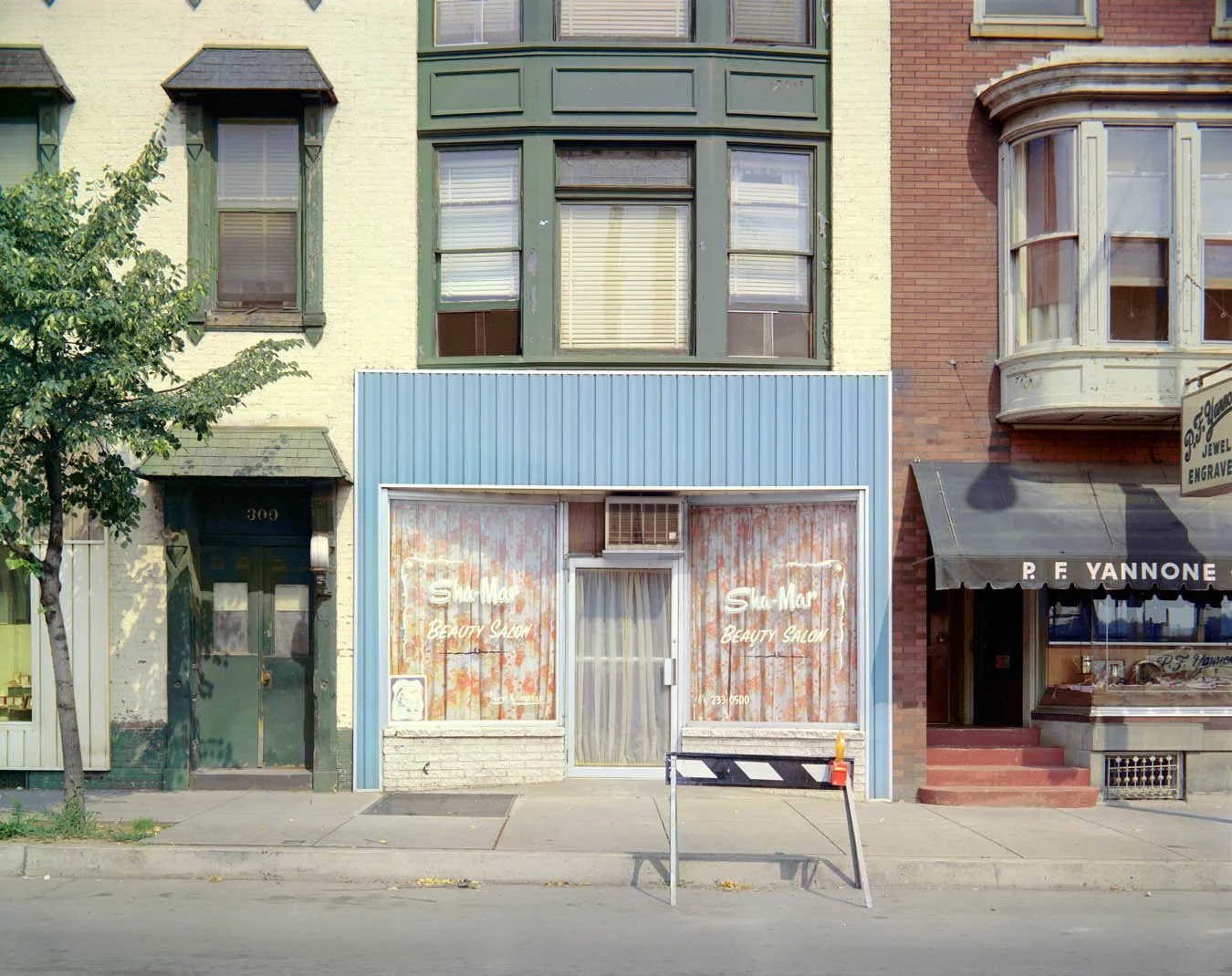
Stephen Shore, Sha-Mar Beauty Salon, Chestnut Street, Harrisburg, Pennsylvania. 1973 - Uncommon Places
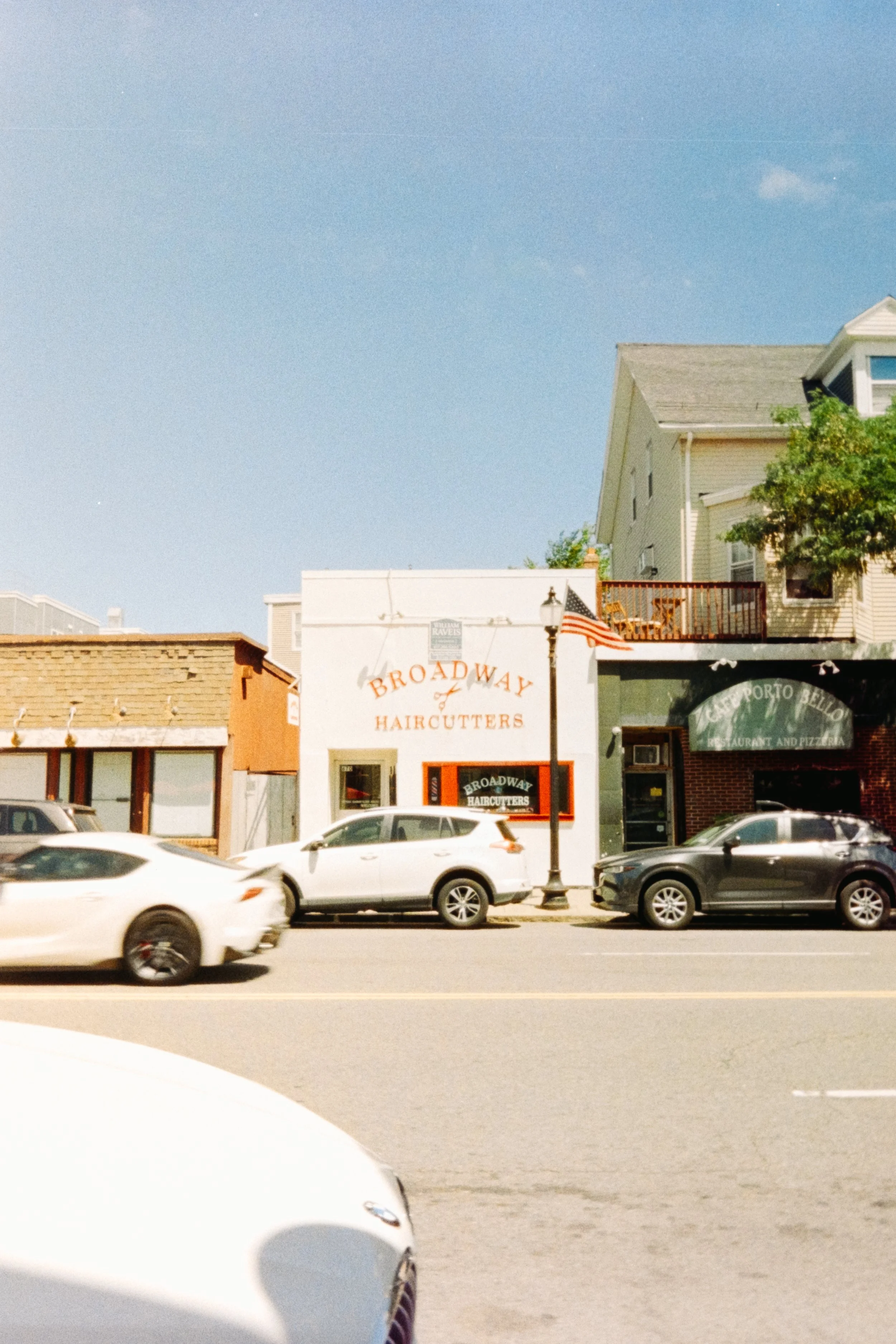
Nathan Duarte, Broadway Haircutters, Boston, Massachusetts. 2026
But I started to appreciate his work the more I looked at his photos. They don’t always give you much at first glance, but then you keep looking, and you start noticing little details you might’ve overlooked. The colors, the signs, the way everything is framed. He had a way of making the mundane interesting, but you truly have to spend some time with the photograph to understand why.
Garry Winogrand made me want to capture everything. His approach of pointing his camera at any and everything that caught his attention just for the sake of seeing what it would look like as a photograph (and ironically leaving behind thousands of rolls of film he never even got around to developing or reviewing) was intriguing and inspiring to me. The way he embraced chaos into his work sometimes makes me wonder if he even knew what he was photographing when he pressed the shutter. And I guess that’s part of the appeal, not knowing exactly how a single moment might translate into a photograph.
There’s a freedom that comes with allowing myself to not be picky with what I choose to photograph, and being curious without having a specific image in mind.
“I photograph to see what the world looks like in photographs.”
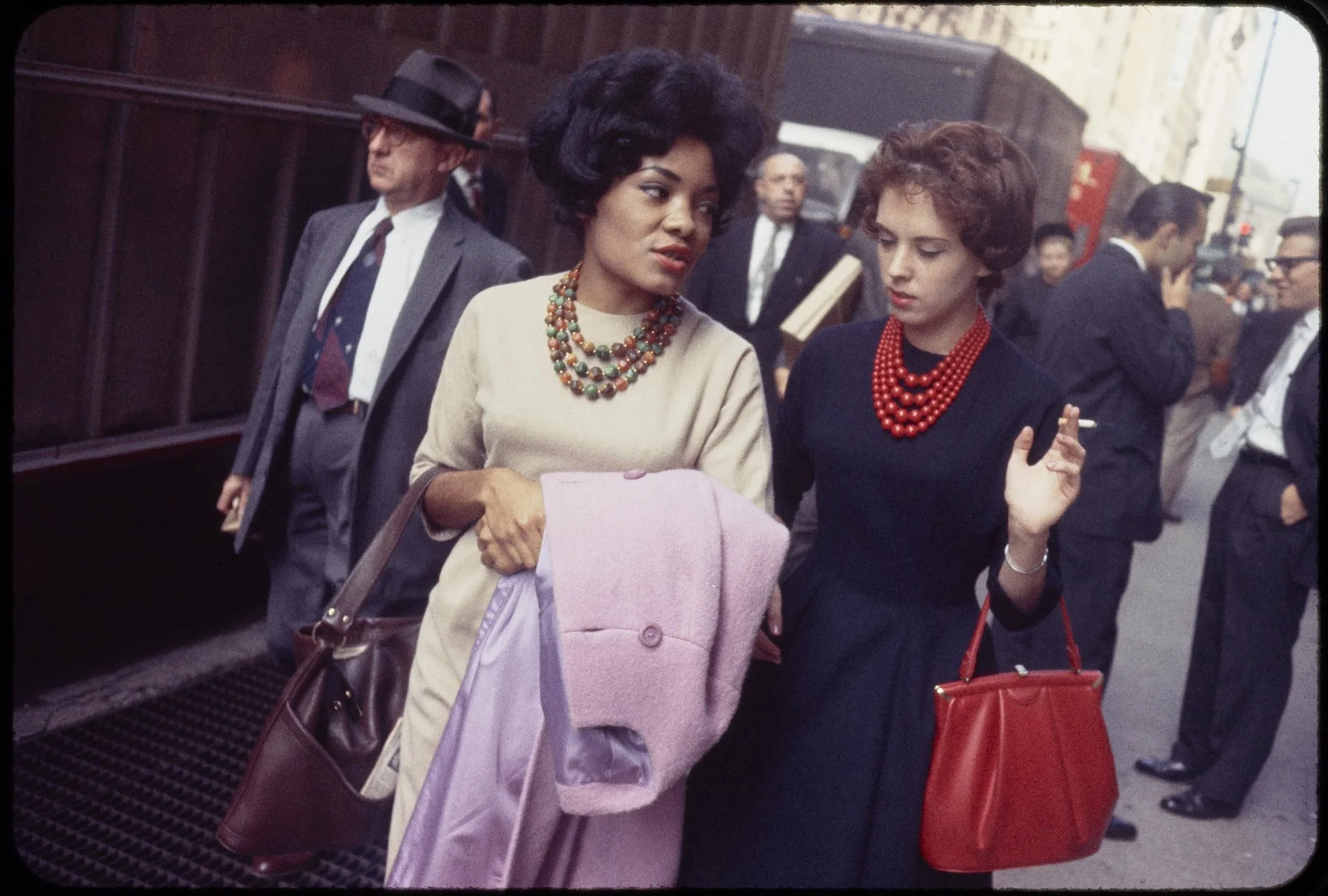
Garry Winogrand, New York, New York. 1965
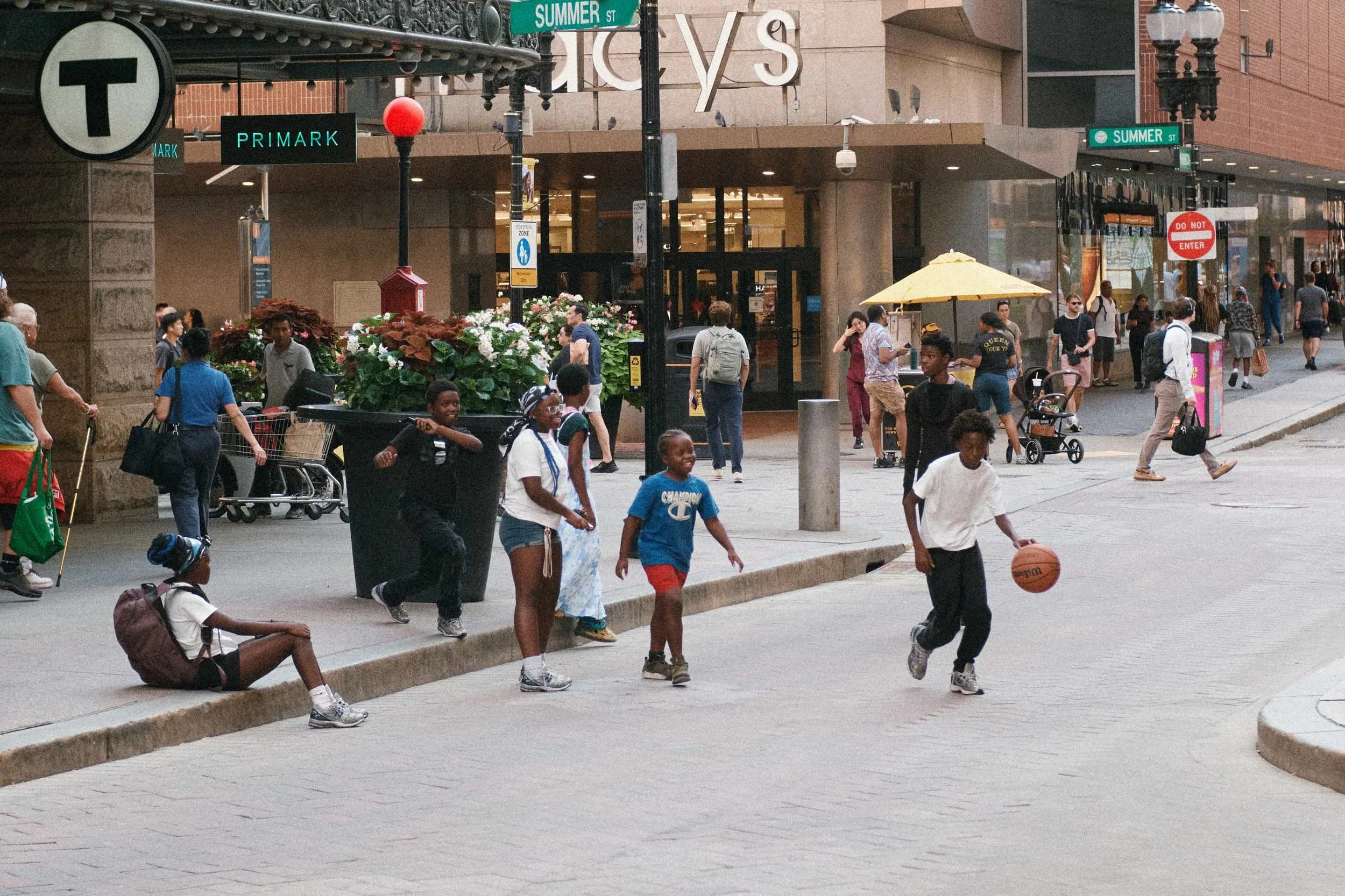
Nathan Duarte, Boston, Massachusetts. 2026
Henri Cartier-Bresson, on the other hand, gave me an opposite perspective. His “decisive moment” approach made me want to slow down and wait for everything in the frame to come together (not to mention film is damn expensive, so this was a good cost-saving measure).
I tried to emulate that for a while, standing on street corners and waiting for someone to walk into frame at the exact perfect time or make the right gesture. And while it was very satisfying to see it come together in the viewfinder, I still wonder how many shots I missed while waiting for the perfect one. I’ve come to realize the decisive moment has less to do with anticipating perfection and more to do with recognizing what’s happening right in front of you.
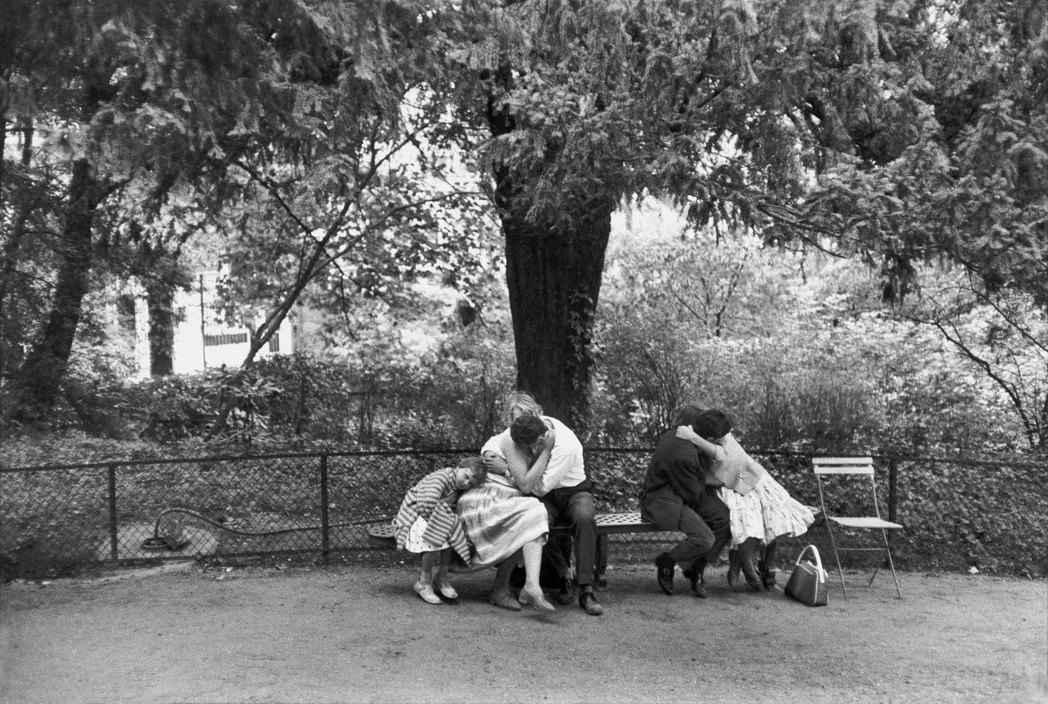
Henri Cartier-Bresson, Jardin des Plantes, Paris. 1959
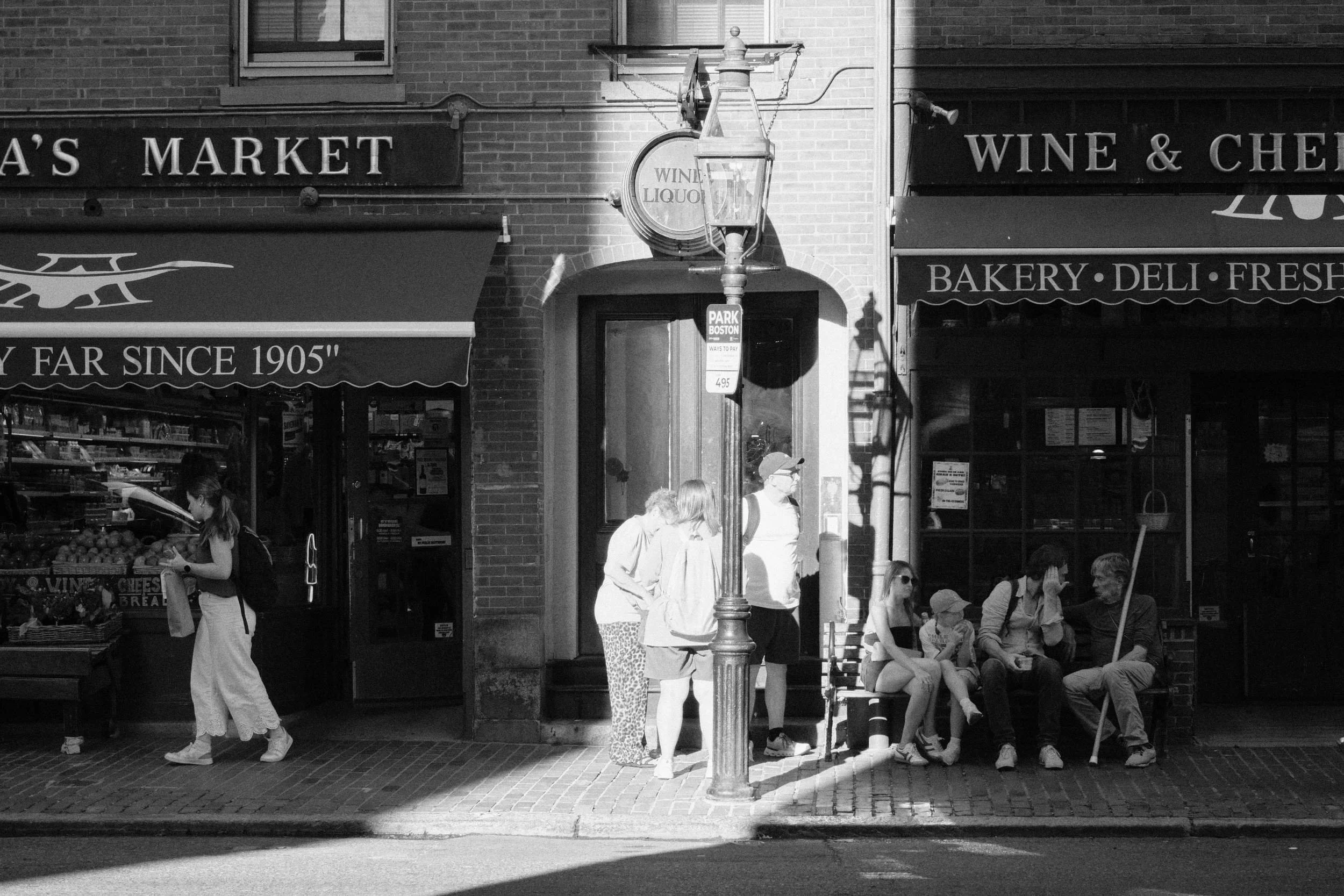
Nathan Duarte, DeLuca’s Market, Boston, Massachusetts. 2026
“To take a photograph is to align the head, the eye and the heart. It’s a way of life.
”
What I learned through all of this is that there really isn’t one correct way to make a worthwhile photograph. The things that catch my eye and I find beautiful or intriguing might not do the same for you, and vice versa. The reason I was initially thrown off by Shore’s work is that it felt too relatable to my own. He wasn't photographing nostalgia, but rather the world as it existed around him. He believed a photograph decontextualizes the world by taking it out of the flow of time. Turns out I was already subconsciously doing the same thing.
I don’t think it’s possible to completely separate my own eye from everything I’ve studied this year, but I believe there’s a big difference between going out and looking for a photograph someone else has already made and allowing their work to change what I notice. I’m sure I still do a little bit of both.
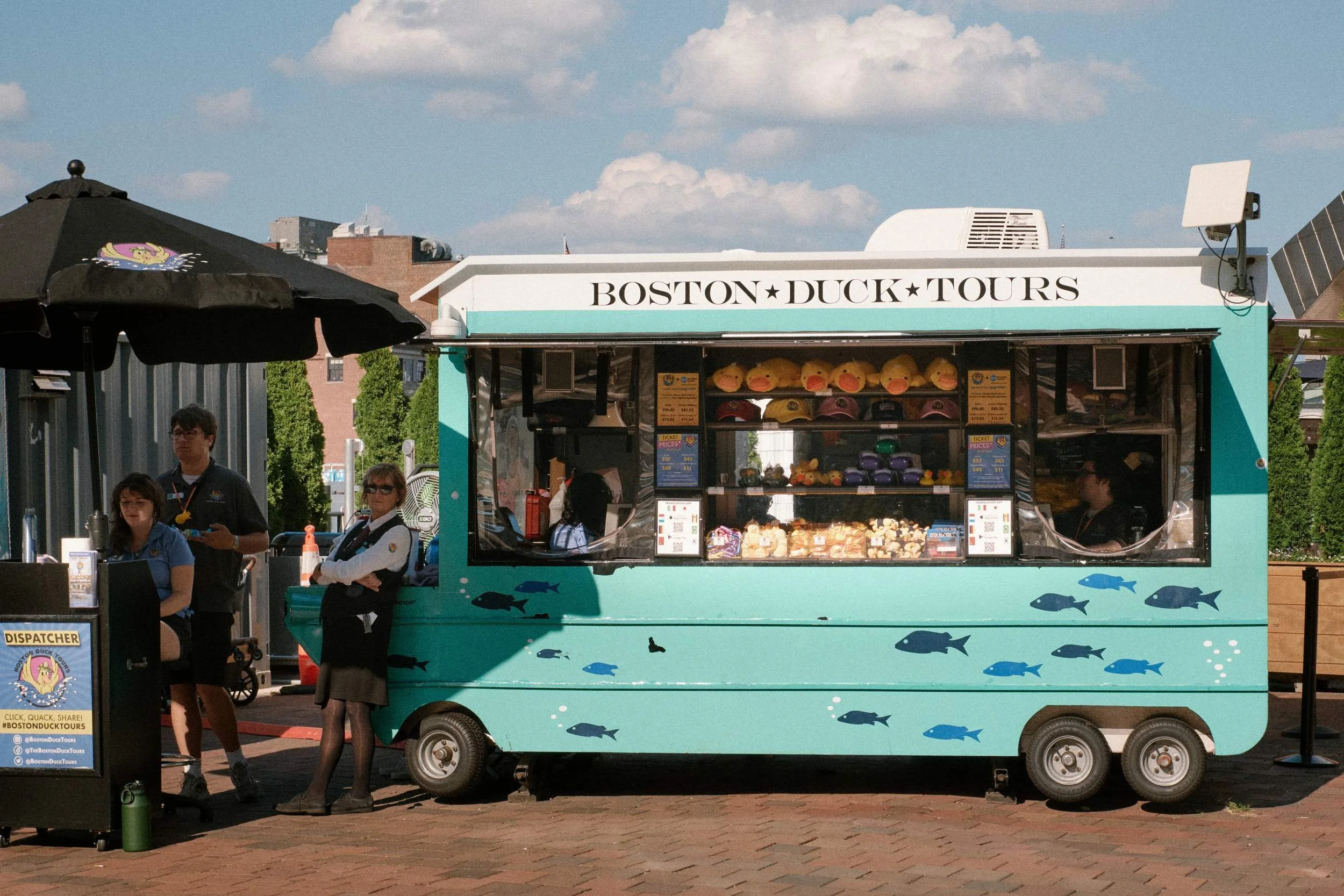
Maybe the point of studying these photographers isn't to eventually see the world the way they did, but actually to understand what they saw in their own time well enough to be more aware of our own.